Going the Extra Mile: Martino Earns McKenzie Method Certification
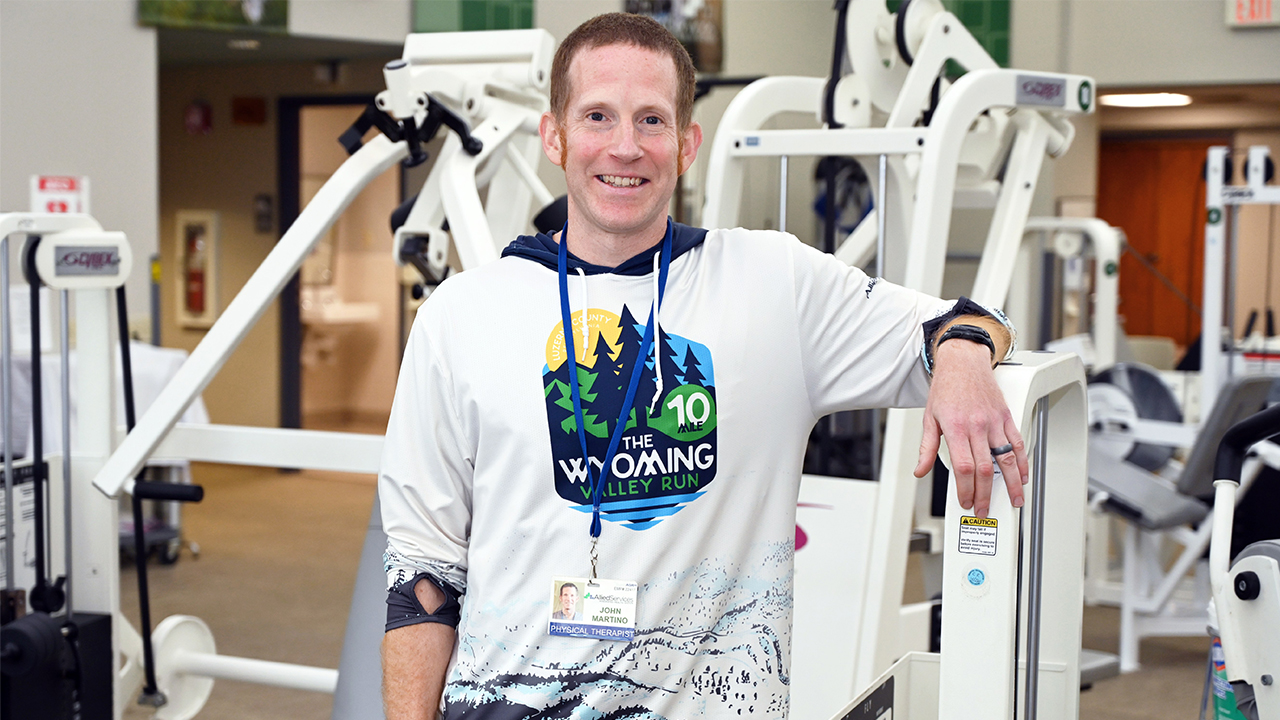
Allied Services celebrates physical therapist John Martino, whose determination to achieve a significant professional milestone is strengthening his ability to help patients manage pain, improve mobility, and regain independence.
For John Martino, PT, DPT, RTS, Cert. MDT, going the extra mile is nothing new. An avid marathon runner, John and his wife, Marina, have set a goal of completing a marathon in all 50 states, with 20 already checked off their list.
That same determination and perseverance recently helped John achieve another important milestone in his career as a physical therapist at Allied Services' Luger Outpatient Rehab Center in Scranton.
In September 2026, John earned his certification in the McKenzie Method of Mechanical Diagnosis and Therapy (MDT), a specialized approach to evaluating and treating musculoskeletal pain that is highly sought after by patients throughout the region.
His achievement represents years of education, hands-on training, and persistence, along with a commitment to helping patients find effective, individualized treatment options.
A Specialized Approach to Pain Relief
For individuals struggling with persistent back pain, neck discomfort, or other musculoskeletal conditions, finding the right treatment approach can make a meaningful difference.
The McKenzie Method, officially known as Mechanical Diagnosis and Therapy (MDT), is a globally recognized, evidence-based approach to assessing and treating conditions affecting the spine and extremities. Developed more than 60 years ago by New Zealand physiotherapist Robin McKenzie, the method emphasizes understanding how a patient's symptoms respond to specific movements and positions.
Unlike approaches that focus primarily on where pain is occurring, the McKenzie Method uses a systematic evaluation to identify patterns in symptoms and determine which movements or positions may help improve them.
The approach can be used for a variety of conditions, including back and neck pain, shoulder and knee problems, hip and elbow discomfort, and certain symptoms associated with bulging discs, arthritis, and degenerative disc disease.
One of its greatest strengths, John explains, is empowering patients to take an active role in their recovery. Through individualized treatment and education, patients learn strategies to help manage their symptoms, improve mobility, and potentially reduce recurring problems.
For some, a McKenzie evaluation may also reveal conservative treatment options they had not previously considered, particularly if they believe surgery may be their only path toward relief.
With specialized McKenzie treatment highly sought after in Northeastern Pennsylvania, John's certification further strengthens Allied Services' ability to offer this approach to patients seeking relief from pain and improved function.
A Goal Years in the Making
John's interest in the McKenzie Method began while studying physical therapy at Misericordia University, where a professor certified in the approach first introduced him to its principles. During his clinical training, he witnessed firsthand the positive impact it could have on patients.
"It was really eye opening, just what was possible through this specific approach to finding the issues people are dealing with," John said.
When John joined Allied Services in 2007, he continued learning from colleagues experienced in the McKenzie Method. Their guidance helped deepen his understanding and inspired him to pursue certification himself.
Achieving that goal, however, would require considerable time and dedication.
The certification process involves five intensive educational courses covering the lumbar spine, cervical and thoracic spine, and upper and lower extremities. Each course spans approximately three to four days, with candidates ultimately required to pass a comprehensive credentialing examination.
John first attempted the exam in 2023 but was unsuccessful. Rather than allowing the setback to discourage him, he used the experience to identify areas where he could strengthen his knowledge.
Over the following years, he reviewed course materials, completed additional online training through the McKenzie Institute, and practiced hands-on techniques with fellow physical therapists.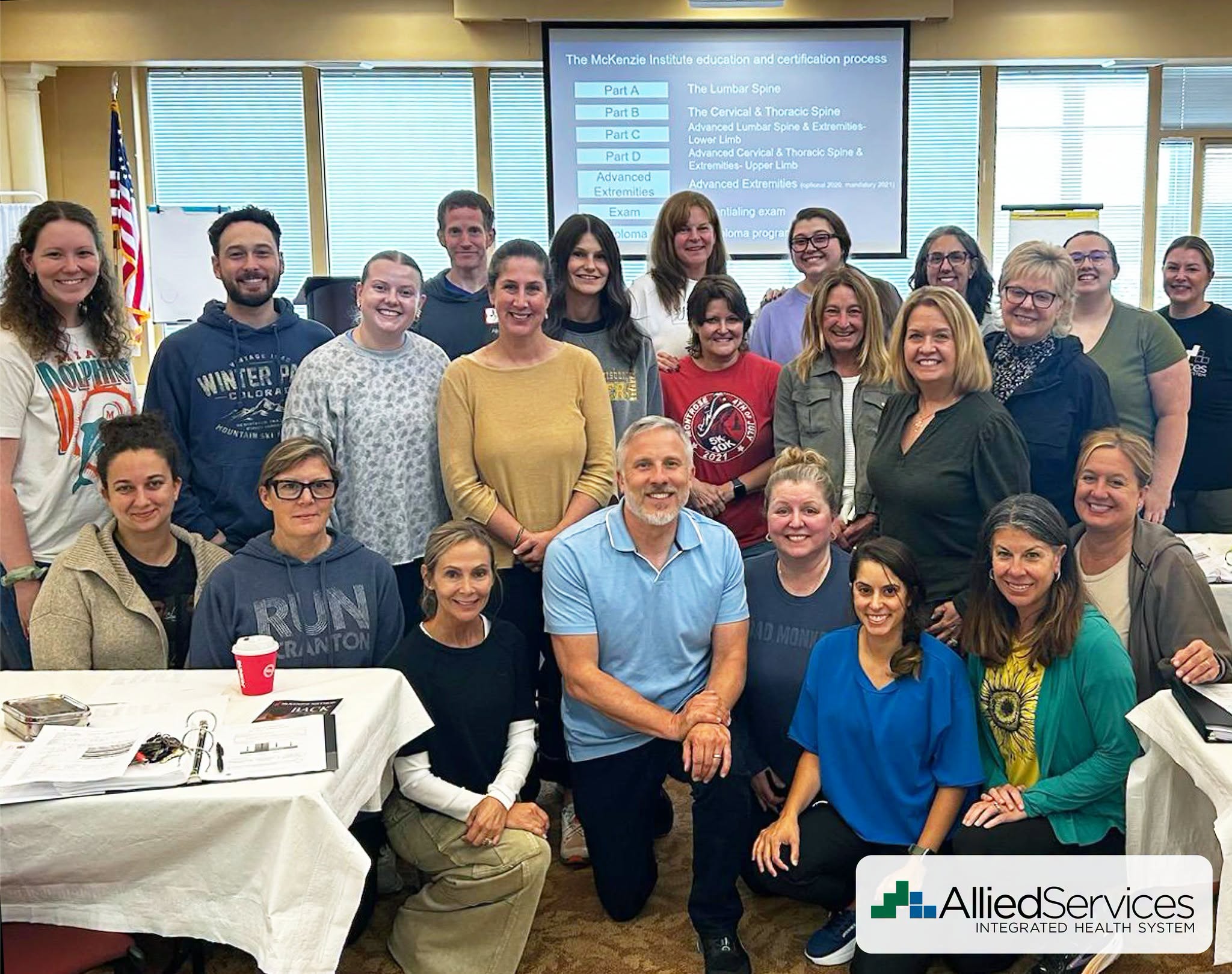
Among those who helped him prepare was former Allied Services colleague and certified McKenzie practitioner John Niznick, PT, JSCC, CMP, MDT. The two worked extensively on manual therapy techniques until the movements became second nature.
John also credits colleagues Dawn VanHorn, MS, PT; Kori Wood, PT, DPT, AVPT; Steven Pheasant, PT, DPT, Cert. MDT; and Lori Griggs, PTA, for their guidance and encouragement throughout the process.
When John returned to take the certification exam in September 2026, he felt better prepared and more confident. This time, his persistence paid off.
"About a week after I took the test, I looked on the McKenzie Institute website and searched for my name under the certified practitioners list and my name popped up. It was pretty amazing," John recalled.
His colleagues at Allied Services were equally excited, celebrating his success with cake and cards.
Expanding Expertise, Strengthening Patient Care
With his certification complete, John joins fellow Allied Services physical therapists Steven Pheasant, DPT, PT, Cert. MDT, and Kelly Gazey, DPT, PT, Cert. MDT, who have also earned McKenzie certification.
Kelly, a certified practitioner for approximately 20 years, has seen firsthand the value of this specialized training.
"The certification has strengthened my ability to develop individualized treatment plans and empower patients through education and self-management. It has significantly improved my capability to help patients achieve improved mobility, function, and long-term outcomes," Kelly shared.
For John, the additional training has already influenced the way he approaches patient evaluations. He finds himself recognizing subtle details and patterns in patients' symptoms that help guide treatment decisions, allowing him to apply his expanded knowledge in meaningful ways.
That deeper understanding can be especially valuable for patients dealing with persistent pain, limited mobility, or conditions that have not responded to previous treatment.
While John is proud of his accomplishment, he is quick to acknowledge the people who supported him along the way, including his colleagues, friends, and family.
"My wife helped me out a lot while I was away taking the classes, taking the kids while I was studying and all. She was really great with that," he said.
Going the Extra Mile for Patients
John's achievement reflects the dedication of Allied Services rehabilitation professionals who continually seek opportunities to expand their expertise, strengthen their skills, and provide the highest quality care for the individuals they serve.
For John, earning his McKenzie certification was about more than achieving a personal or professional goal. It was about gaining additional tools to help patients better understand their conditions, explore treatment options, and take meaningful steps toward recovery.
His message to individuals living with musculoskeletal pain is encouraging: there may be more options available than they realize. An evaluation by a certified McKenzie practitioner can help determine whether a conservative, movement-based treatment approach may be appropriate for their needs.
And whether John is helping a patient take the next step toward recovery or working toward his next marathon finish line, the motivation remains much the same: progress takes patience, determination, and a willingness to keep moving forward.